


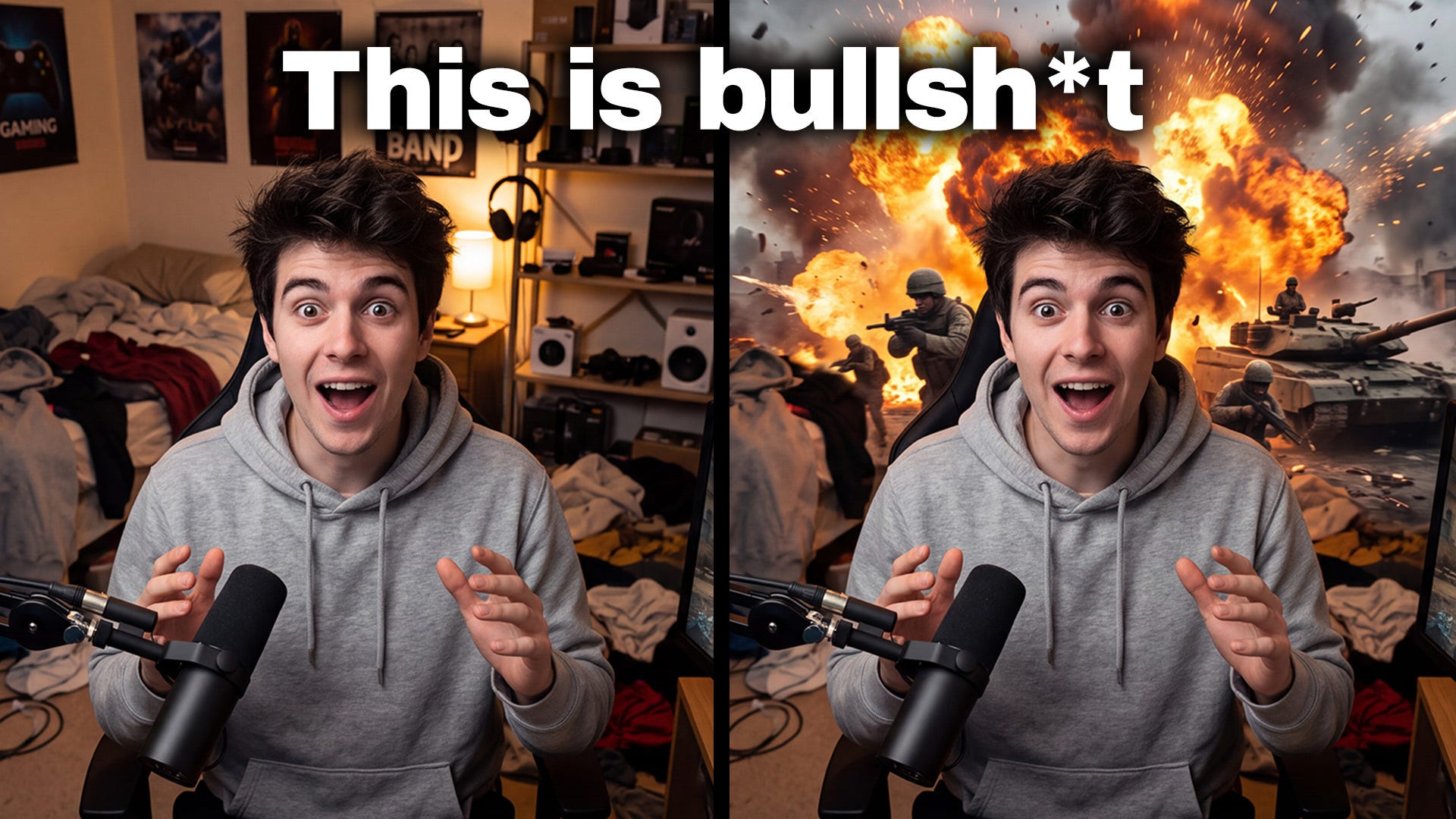
A brand came to us recently with an ad they’d made for YouTube. Fully AI generated, start to finish. Script, voice, visuals, all of it. It cost them almost nothing and it looked… fine. But results were less than fine, so they wanted to know what we thought went wrong.
Technically, nothing. Practically, everything.
The issue was that they’d made an ad that talked about community and togetherness while looking like AI slop. On a platform that runs on people, not on ads. I said something on that call I’ve been saying more and more to both creators and brands lately: to connect on YouTube, you have to be a YouTuber. You don’t get to show up with a handful of slop and expect the room to care.
Different conversation, same week. A review-focused channel, well researched, legitimately useful videos, flattening out. We went looking for the format problem and eventually landed somewhere less comfortable: a viewer can get that exact information out of Claude in about nine seconds. The information was never the reason to watch, the host was. But the videos were built like corporate explainers, so the host wasn’t clicking with the audience.
I had four conversations over the last two weeks about roughly the same concept. So here’s where I’ve landed:
The flood of cheap, competent content is doing your differentiation for you. Let it.
The clearest signal I’ve seen came from our creative partner Matt Wolfe, who lives deep in the AI space. Matt knows the tools better than anyone. His plan for this year isn’t more output. It’s fewer videos, rawer, documentary-style, bigger swings. Slower and more expensive on purpose.
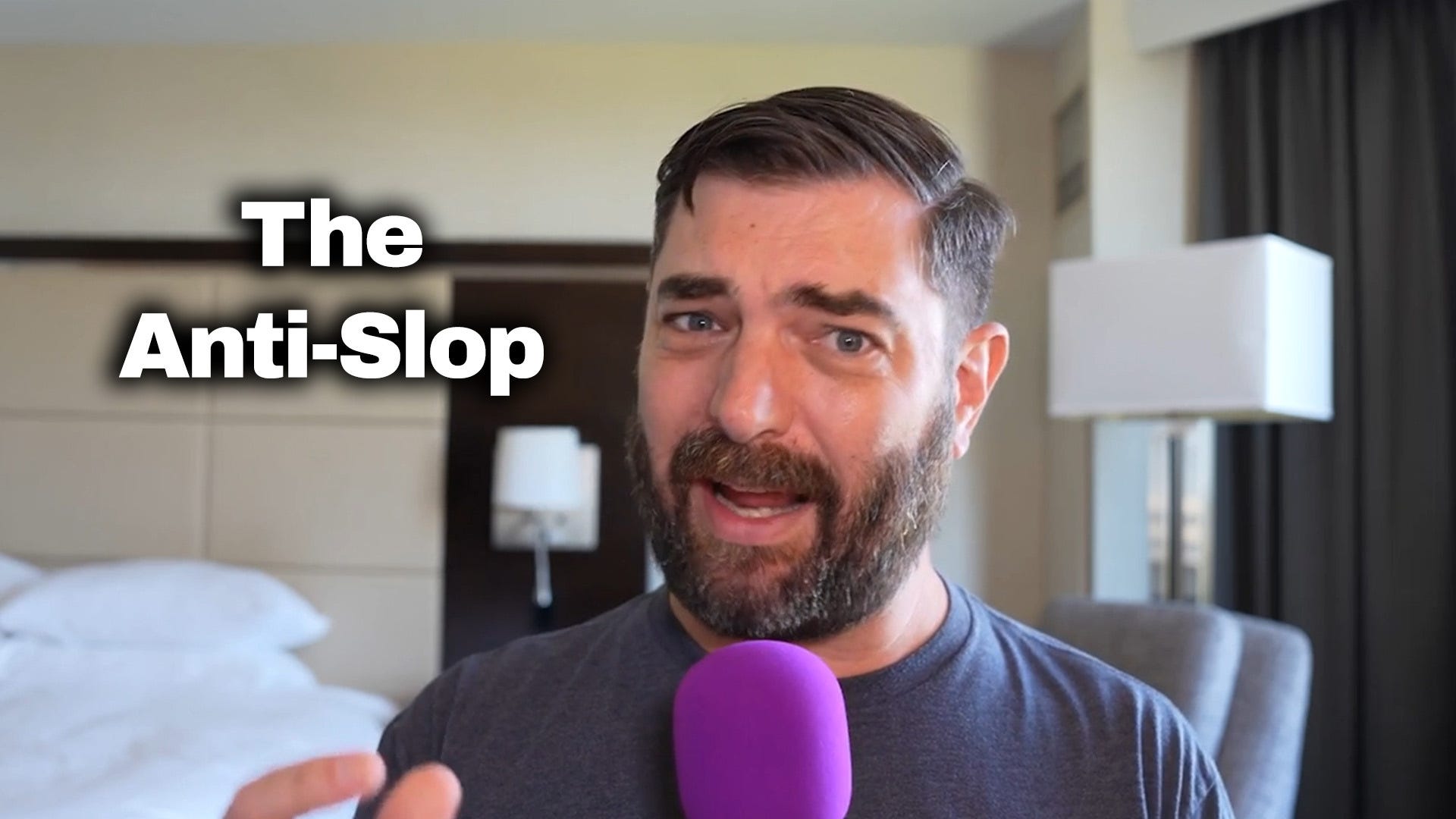
The guy with the best access to the shortcut is deliberately walking past it. How ‘bout that?
(Also, a quick round of applause for Matt who is hitting 1M subscribers in the next week or so!)
For most of YouTube’s recent history, production quality was the moat. Cameras, editors, motion graphics, the time to use all three. Thanks to AI, that’s all changed. And when a constraint disappears, the value doesn’t disappear with it. It moves to whatever’s still scarce.
What’s still scarce is a person worth spending twenty minutes with.
Which is why the slop is such an opportunity rather than a threat. Our feeds are currently filling up with polished, cheap, forgettable videos. The bar for looking professional is heading to zero. The bar for being worth watching is going up. In fact, I would argue that audiences are actively pushing back on some higher-production videos in favor of more lo-fi offerings that have higher authenticity and relatability.
I know “the human part is the valuable part” is an extremely convenient thing for me to believe. But we use AI all over our own workflow. Transcripts, research, first-pass concepts. I’m still not making an anti-AI argument.
The line I’d draw is back office versus on camera. Use the machines for everything nobody sees. Nobody has ever subscribed to a workflow. Except productivity content…
Here’s the part I think most channels won’t do anything with, unfortunately. It asks for the opposite of what the last five years of advice trained everyone to do. Don’t make more videos. Don’t aim for a faster turnaround. Don’t add another tool to the stack. Be more present in your own content - something that is harder, slower, and a lot more exposing than generating twelve assets before lunch.
So, a question about your last upload: If you strip out every fact a viewer could have gotten somewhere else in under a minute, what’s left?
If the answer is “the video,” good. If it’s “not much,” you didn’t make a video. You made a search result with a face on it.
Go get ‘em.