


We produce a lot of podcast clips at Hooked. Which means we get pitched a lot of software that promises to make producing podcast clips easier.
Upload the episode. Let AI find the best moments. Get a batch of clips ready to publish.
I understand the appeal. When you have multiple shows going out every week, anything that can reliably take work off your team’s plate is worth trying.
And we’ve tried: Opus Clip, Descript, Autocut, Riverside, Veed, and more…
We keep ending up in the same place.
Having a human select, structure, and edit the clips gets us a better product, with less back-and-forth, in less total time.
At a certain point, repeatedly testing a shortcut that creates more work becomes its own production problem.
The part that frustrates me most is how much of the pitch assumes that deciding what makes a good clip is something we can skip.
A conversation might contain an interesting statement. But will someone who has never seen the show understand why it matters? Does the clip give them enough context? Does it start at the right moment? Do we need to reorder the dialogue? Is there an actual payoff?
Those decisions are the work.
Imagine a guest tells a great story halfway through an episode. The setup happened two minutes earlier. The most useful explanation comes immediately afterward. Somewhere in the middle, the host interrupts with a tangent.
A good editor can build a complete piece out of that material. Bring in the necessary setup, remove the detour, preserve the speaker’s meaning, and get to the payoff before the viewer loses interest.
The strongest version almost never exists as one uninterrupted section of the conversation.
That came up in a podcast production discussion earlier this year. The team had tested automated clipping and still needed manual editing. Their preferred clips were deliberately built into short stories, sometimes by combining multiple moments.
They also reported that manually selected clips consistently performed better on YouTube.
Another problem: the automated selections kept favoring one host. Someone still had to understand the show well enough to recognize what the other host contributed and go looking for those moments.
That is a pretty fundamental editorial decision to leave to a tool that keeps getting it wrong.
And once those decisions come back to you and your team, the time-saving argument goes out the window.
Someone has to watch the generated clips, work out which ones are usable, check the context against the episode, fix the opening, restructure the edit, review the new version… not to mention a plethora of technical bugs, eg. showing the wrong person, bad captions, glitchy frames, etc.
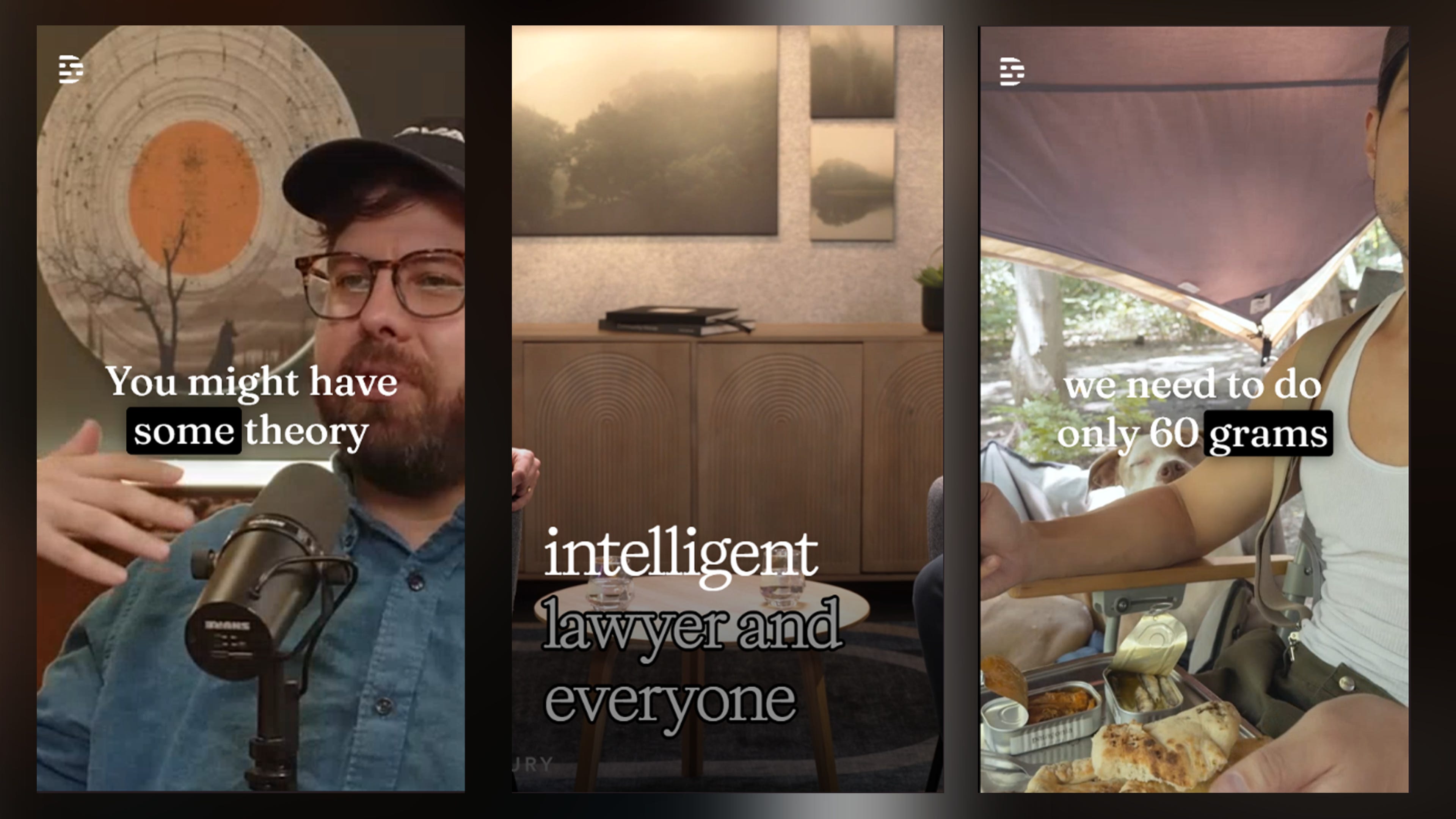
The overwhelming consensus from our editing team is that they’d have been better off editing it manually from the get-go. We’ve scrapped auto-edits often enough that at this point, I struggle to see how it’s in any way worthwhile.
A one-minute first export means very little if your editor spends another two hours trying to turn it into something worth publishing.
And producing more clips doesn’t solve that problem. If the selections are weak, a bigger batch gives your team a bigger review queue.
For a podcast producing clips every week, I’d put that effort into an editor who understands the show. Someone who knows the hosts, recognizes what the audience cares about, and can explain why a particular moment deserves to become a clip.
That understanding gets better with repetition: feedback from one episode carries into the next - the editor learns which openings take too long, which ideas need more context, and which moments actually deliver.
That is where I want our production process to become more efficient.
We use AI elsewhere in the production process - we’re all thrilled AI does our captions. I’m happy to use tools that take specific tasks off our plate or make us more effective. AI clip selection and assembly ain’t it.
If you’re evaluating one of these platforms, count everything: selection, review, corrections, re-editing, and approval. Then look at how the finished clips perform.
I’d bet a good human editor will keep winning.
Go get ‘em