


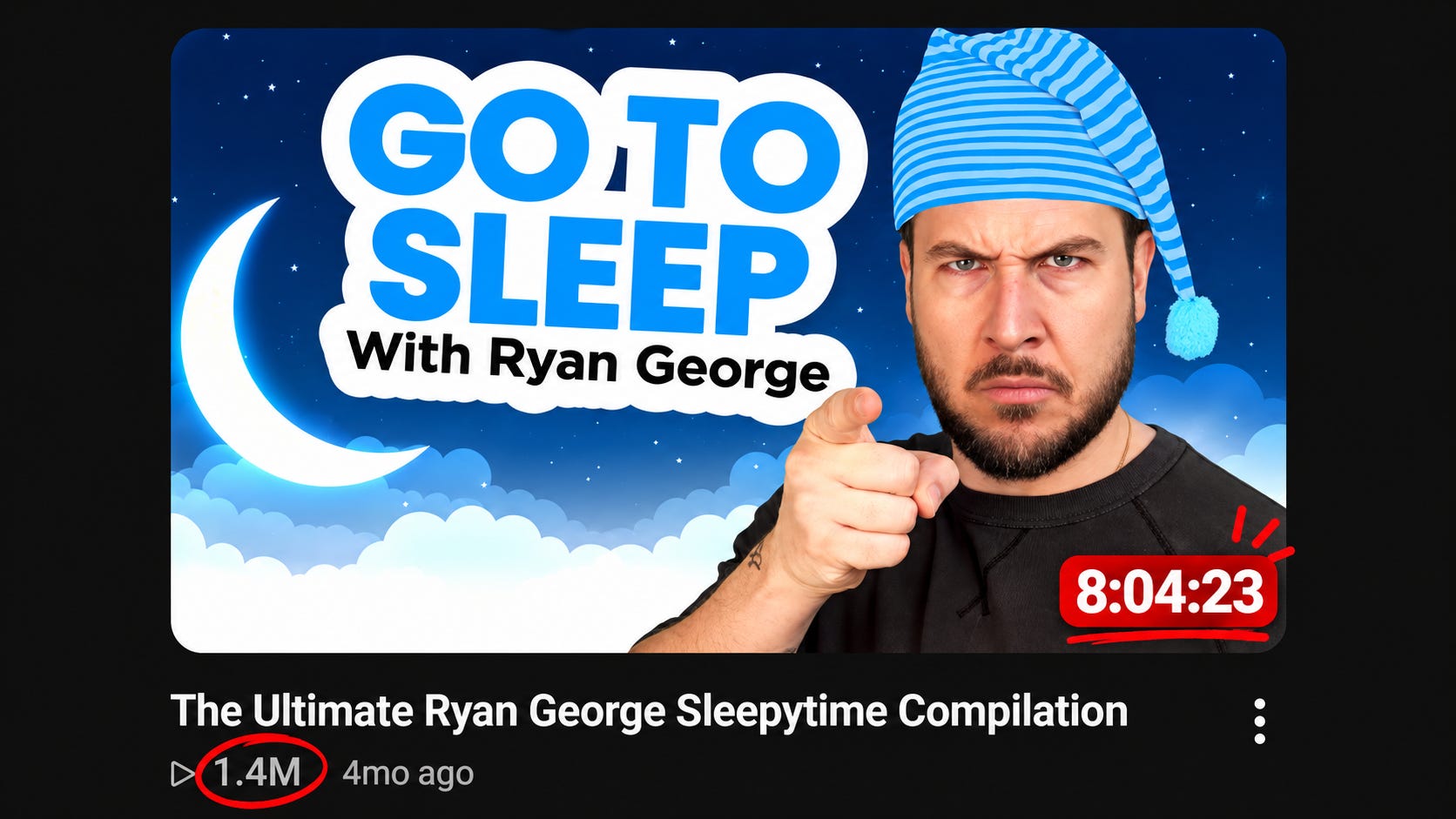
Eight hours of existing material. Packaged as a “Sleepy Time” video.
Ryan is no stranger to compilations. He’s been running them on his channel since long before we started working together. They usually perform decently and help keep the channel going when we need a week off.
He saw a comment from a fan asking him to make a long compilation to use as a sleep aid, and decided to give it a shot. We took 172 of Ryan’s sketches, split them up with a few reminders from Ryan to have sweet dreams, and packaged it like it was a new video… that was 8 hours long.
If you’d asked us beforehand where the next big success would come from, this would not have been our answer. It’s absolutely ripping and is showing no signs of slowing down.
Which is a sobering reminder that an audience is under no obligation to want the experience we think they should want.
Most of our work on YouTube starts from a fairly reasonable assumption: we can convince at least some people to sit down and focus on the thing we’re producing.
So we work on the hook, add elements that reengage, cut the parts where the energy drops. We constantly ask if we’re giving the viewer a reason to keep watching.
Ryan’s video reminded me that there are user experiences on YouTube that we forget about or don’t explore often enough.
Sometimes they want company. Something familiar while they cook, work, or wind down. Sometimes they want a creator they already enjoy without having to choose another video every few minutes. Sometimes they want to put a video on in the background while doing anything else and not click again for up to 8 hours.
A long compilation can serve that person differently from, let’s say, a short or a standard long-form video upload. In our example, the length we normally treated as an obstacle that needed to be relentlessly cut down was the main selling point.
Despite his soothing voice, I can’t confidently say that everyone watching Ryan’s video was falling asleep to it. But the result does make me question how narrowly we sometimes define the experience our content is supposed to provide.
We tend to think about a library of videos as a collection of things we’ve already published. The audience may see a collection of things they’d happily spend time with again.
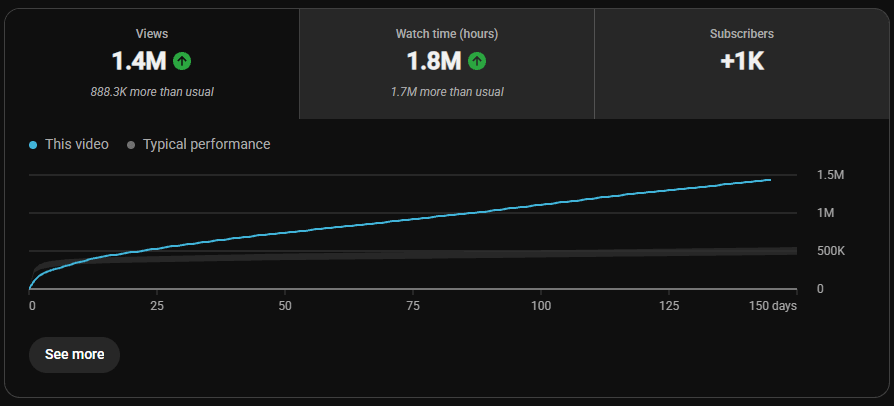
In the case of an 8-hour compilation, we already had the material, and people already liked it. Years of creative work went into making a library worth returning to.
So if your takeaway is “I should upload eight hours of anything,” I’d respectfully suggest a second takeaway.
The opportunity is to ask what else your existing work might be useful for.
Could a set of related videos become something people want to watch in one sitting? Is there a recurring conversation your audience would enjoy in a longer format? Are people returning for the information, the jokes, your perspective, or simply the experience of spending time with you?
Those are different reasons to watch and they might deserve different kinds of uploads.
This is also where being experienced can make us a little too confident.
We’ve seen enough videos fail that we’ve developed decent instincts around what will and won’t work. And those instincts help us avoid expensive mistakes. But they can also become a very easy comfort zone to become trapped in.
Ryan’s video is an important reminder to leave room for the idea that doesn’t look particularly impressive at first glance.
You don’t need to overhaul your channel or reinvent the wheel. But maybe there’s an idea in there that offers a unique experience that aligns with what a specific audience is looking for in the moment. Maybe it earns meaningful revenue. Maybe it brings existing viewers back. Maybe it does neither, but teaches you something about your audience without consuming a month of production.
The point is to make room for an answer you wouldn’t have predicted.
We spend a lot of time trying to become better at knowing what will work. But sometimes the most useful thing we can say is: “Not sure about that one, but I’m good to try it.”
Go get ’em.