


Four videos in a row underperformed for a creator we work with. And not because they were bad. They were objectively (and a bit subjectively) good. Clean edits, solid value offering, the kind of tutorials that would’ve put up strong numbers a few years ago. They got crushed by bigger channels making the exact same videos.
We spent a while trying to fix the videos before we admitted the obvious: the videos were never the problem. The category was.
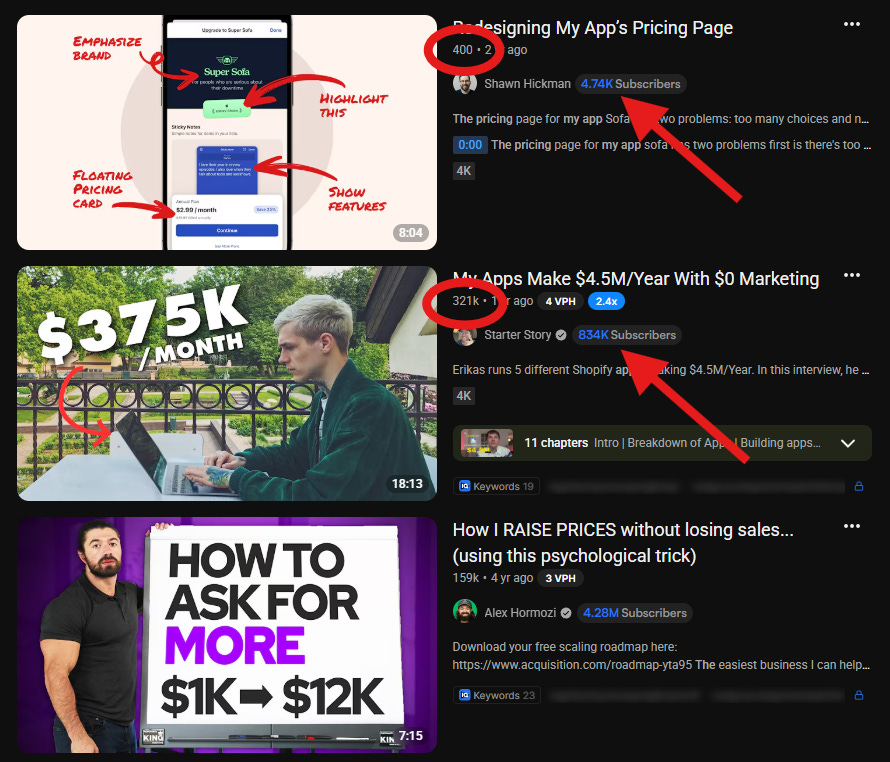
When everyone is doing the same thing, you’re not competing on quality. You’re competing on subscriber count. And you’ll lose to whoever’s bigger.
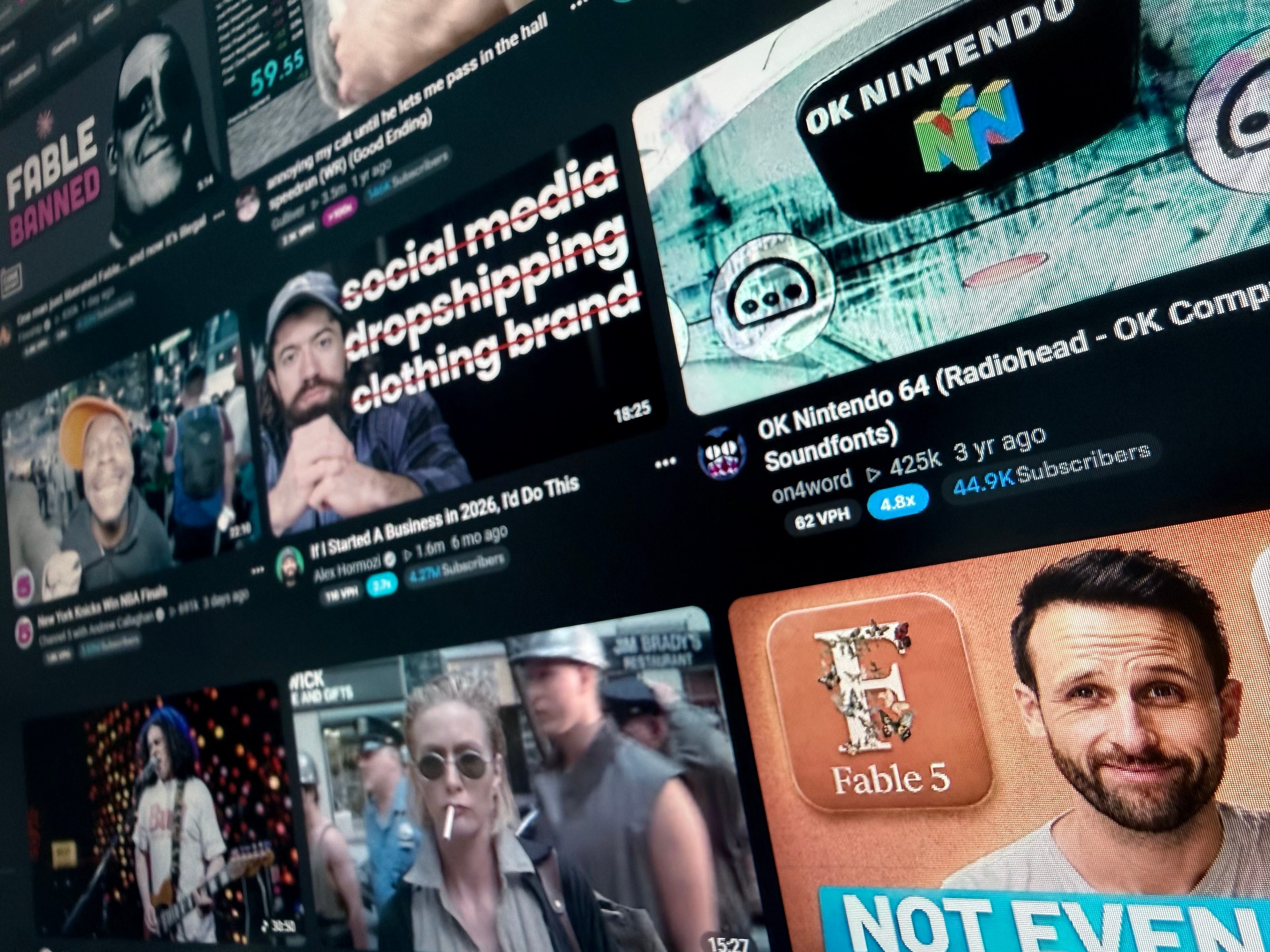
YouTube doesn’t really hand your video to your subscribers; it drops it into browse and suggested, next to a sea of other thumbnails, some on the exact same topic. When a viewer is choosing between five near-identical options, they don’t click the highest-quality one. They can’t see quality from the thumbnail. They click the channel they recognize, or the one with the bigger view count, because views and subs read as proof it’s worth their time when their time is already at a premium.
Which is why “just make better videos” is such a trap. Packaging aside - you can double the effort, sharpen the script, upgrade the graphics, and move the needle approximately nowhere because execution was never what held you back. The video was replaceable. A better version of a replaceable video is still replaceable.
The way out isn’t a better video. It’s a video only you could have made.
Same lesson, different delivery. Instead of “how to handle a pricing change” (a video 200 channels could shoot this afternoon) you tell the story of the pricing change you actually ran, the one that scared you and worked anyway. Same takeaway for the viewer. But now the lesson is welded to your specific experience, and nobody can clone it, because nobody else lived it.
The developer I mentioned is a good example. The pivot wasn’t “better dev tutorials.” It was talking-head videos about the real problems he hit building his own business. War stories that happen to teach the same things a tutorial would. Except no one without his exact résumé could make them. One of the titles we kicked around was “I lost 90% of my users — and why that’s a good thing.” A tutorial channel could cover that pricing lesson in the abstract. None of them could put their name on that sentence.
That’s the whole difference: educational content versus personal-narrative-as-educational. The first is a commodity, and commodities compete on size. The second is a moat. The lesson can be word-for-word identical. What changes is whether the video is interchangeable, and interchangeable is the thing quietly killing the YouTube middle class.
So run one quick check before your next upload. Name three things in the video that only you could have said: a specific number from your own work, a real decision you made, a mistake with your fingerprints on it. Three is the bar. If you can’t get there, you’ve made a video 200 other people could’ve made, and in that race, the only variable that matters is who showed up bigger.
You don’t want to win the size contest. You want to opt out of it.
Go get ‘em.